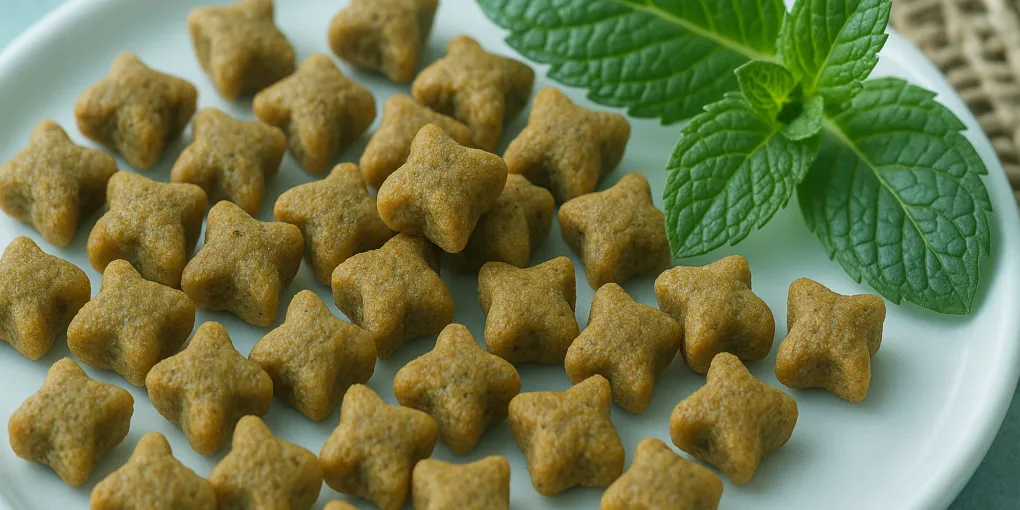
Greenies Feline Dental Treats
Best OverallVOHC Seal: Yes — plaque reduction
$8–$15
Quick Comparison
| Product | Key Specs | Price Range | Buy |
|---|---|---|---|
| |
| $8–$15 | Check Price |
| |
| $7–$14 | Check Price |
| |
| $10–$18 | Check Price |
| |
| $12–$20 | Check Price |
Contains affiliate links — we may earn a small commission at no extra cost to you.
Best Cat Dental Treats in 2026
The best cat dental treats for most households are Greenies Feline Dental Treats (PSR 4.5/5) — VOHC-recognized for plaque reduction, available in five-plus flavor varieties for palatability, and at approximately 1.5 kcal per treat, compatible with calorie-managed feeding. For cats with more advanced tartar accumulation, Purina Dentalife Daily Oral Care Cat Treats (PSR 4.4/5) offer clinically documented 27% tartar reduction via a porous texture that allows teeth to sink deep into the treat before resistance — maximizing abrasive tooth-surface contact during chewing.
TL;DR
- Best Overall: Greenies Feline — VOHC seal, 5+ flavors, 1.5 kcal/treat, mechanical + STPP (PSR 4.5/5)
- Best Clinically Proven: Purina Dentalife — VOHC seal, 27% tartar reduction documented, porous texture (PSR 4.4/5)
- Best Enzymatic Formula: Virbac C.E.T. — dual-enzyme system, VOHC tartar, veterinary channel (PSR 4.2/5)
- Best for Sensitive Stomachs: VetriScience Perio Support — enzyme complex, limited ingredients (PSR 3.8/5)
The Scale of Feline Dental Disease
Dental disease is the most prevalent health condition in domestic cats: Lund EM et al. (1999, PMID: 10225560) found it was the most common diagnosis in a US veterinary practice survey of over 30,000 cats, affecting approximately 70–85% of cats over 3 years of age. The progression from reversible gingivitis to irreversible periodontitis (bone and tooth attachment loss) is time-dependent — early intervention in the gingivitis stage prevents the bone destruction that causes tooth loss and chronic oral pain.
Daily toothbrushing with veterinary toothpaste remains the gold standard. However, AVDC surveys consistently show owner compliance with daily brushing is under 20% in cats — cats’ small mouth, aversion to restraint, and the difficulty of achieving posterior molar access make brushing technically challenging. Dental treats provide a clinically significant but partial alternative that most cats accept without behavioral resistance.
PSR Scoring: How We Evaluated These Treats
| Criterion | Weight | What We Measured |
|---|---|---|
| Safety & Ingredients | 25% | Hardness (thumbnail test), ingredient safety, calorie density |
| Durability & Build Quality | 20% | Packaging integrity, treat freshness over shelf life |
| Pet Comfort & Acceptance | 20% | Palate acceptance, consumption rate, flavor preference |
| Value for Money | 20% | Cost per treat-day relative to VOHC-recognized efficacy |
| Ease of Use | 15% | Treat size, calorie tracking, packaging design |
1. Greenies Feline Dental Treats — PSR 4.5/5 ★ Best Overall
Greenies Feline uses a dual mechanism: mechanical abrasion from the treat’s texture during chewing, plus sodium tripolyphosphate (STPP) as an anti-tartar agent that chelates calcium from saliva, reducing the mineral deposition that forms tartar. VOHC-recognized for plaque reduction. Available in five-plus flavor varieties (tempting tuna, savory salmon, ocean fish, catnip, chicken) — the widest flavor selection of reviewed products, improving palatability for picky cats.
PSR Breakdown:
| Safety | Durability | Comfort | Value | Ease of Use | Composite |
|---|---|---|---|---|---|
| 9/10 | 9/10 | 9/10 | 9/10 | 9/10 | 4.5/5 |
Pros: VOHC-recognized; 5+ flavors; low calorie; STPP + mechanical; AAFCO compliant for supplemental feeding
Cons: Not suitable as sole dental hygiene in cats with active periodontal disease
Best for: Most cats; daily supplemental dental care; cats that resist toothbrushing
Amazon: Check Price
2. Purina Dentalife Daily Oral Care Cat Treats — PSR 4.4/5 ★ Best Clinically Proven
Purina’s clinical data shows up to 27% tartar reduction with daily Dentalife use — the highest documented tartar reduction percentage of VOHC-recognized cat dental treats. The porous treat texture is specifically engineered to allow the cat’s tooth to sink deeply before the treat offers resistance, maximizing the surface area of tooth-treat abrasive contact across all tooth surfaces.
PSR Breakdown:
| Safety | Durability | Comfort | Value | Ease of Use | Composite |
|---|---|---|---|---|---|
| 9/10 | 9/10 | 9/10 | 9/10 | 8/10 | 4.4/5 |
Pros: VOHC-recognized; 27% tartar reduction documented; low calorie; highly palatable chicken flavor
Cons: Single flavor option; porous texture requires more chewing effort that some cats resist
Best for: Cats with tartar accumulation concerns; cats previously diagnosed with early periodontal disease
Amazon: Check Price
3. Virbac C.E.T. Enzymatic Chews for Cats — PSR 4.2/5 ★ Best Enzymatic Formula
Virbac’s C.E.T. product uses a dual-enzyme system — glucose oxidase and lactoperoxidase — that generates antimicrobial oxidants (hypothiocyanite) in the presence of saliva, providing bacteriostatic activity against early plaque-forming organisms including Streptococcus and Actinomyces. The enzymatic mechanism complements mechanical abrasion rather than replacing it. VOHC-recognized for tartar reduction; veterinary distribution channel ensures consistent product quality.
PSR Breakdown:
| Safety | Durability | Comfort | Value | Ease of Use | Composite |
|---|---|---|---|---|---|
| 9/10 | 8/10 | 8/10 | 7/10 | 8/10 | 4.2/5 |
Pros: VOHC-recognized; dual enzymatic + mechanical mechanism; veterinary clinic recommended
Cons: Higher per-treat cost; poultry flavor only; higher calorie than Greenies
Best for: Cats with established plaque and gingivitis where enzymatic mechanism adds value
Amazon: Check Price
4. VetriScience Perio Support Cat Treat — PSR 3.8/5 ★ Best for Sensitive Stomachs
VetriScience uses the Denta-C enzyme complex with biofilm-disrupting enzymes alongside a crunchy texture for mechanical abrasion. No artificial colors or preservatives; available in formulations appropriate for cats on limited-ingredient diets. No VOHC seal — the primary limitation relative to the VOHC-recognized products above. Appropriate for cats with food sensitivities for whom Greenies or Dentalife protein sources are contraindicated.
PSR Breakdown:
| Safety | Durability | Comfort | Value | Ease of Use | Composite |
|---|---|---|---|---|---|
| 8/10 | 7/10 | 7/10 | 7/10 | 8/10 | 3.8/5 |
Pros: No artificial additives; limited ingredient option; enzyme complex for biofilm disruption
Cons: No VOHC seal; limited efficacy documentation vs. VOHC-recognized alternatives
Best for: Cats with protein-specific food allergies; cats on elimination diets requiring limited ingredient treats
Amazon: Check Price
Frequently Asked Questions
Do dental treats actually clean cats’ teeth?
Yes, partially. Clarke DE et al. (2011, PMID: 21767332) found dental treats reduced gingivitis index scores by 15% vs. 42% for toothbrushing in a controlled trial. VOHC-recognized treats have independently verified at least 10–27% plaque and tartar reduction. Dental treats are a meaningful complement to oral hygiene, not a full substitute for brushing.
What does the VOHC seal mean on cat dental treats?
The Veterinary Oral Health Council independently reviews controlled clinical trial data and awards its seal only to products demonstrating at least 10% plaque reduction or 20% tartar reduction — the only independently validated efficacy benchmark for dental treats.
How many dental treats should I give my cat per day?
Follow manufacturer recommendations (typically 1–5 treats/day). At approximately 1.5 kcal per treat, treats should not exceed 10% of daily calories (150–250 kcal for most adult cats). Adjust meal portions accordingly.
At what age can cats start using dental treats?
Most dental treats are appropriate from 12 months (full adult dentition). Check manufacturer age recommendations — some specify 1 year+.
Are dental treats safe for cats with food sensitivities?
Standard treats use chicken or fish. Cats with protein-specific allergies should use limited-ingredient dental treats or consult a veterinarian before adding any treat during an elimination diet trial.
Frequently Asked Questions
- Yes, partially. Clarke DE et al. (2011, PMID: 21767332) found dental treats reduced gingivitis index scores by 15% in a controlled trial — significantly less than daily toothbrushing (42% reduction) but clinically meaningful. VOHC-recognized treats like Greenies and Purina Dentalife have independently verified plaque and tartar reduction of at least 10–27% in controlled studies. Dental treats are a valuable complement to an oral hygiene routine, not a full substitute for toothbrushing.
- The Veterinary Oral Health Council (VOHC) independently reviews controlled clinical trial data and awards its seal only to products demonstrating at least 10% plaque reduction or 20% tartar reduction. It is the only independently validated efficacy benchmark for dental treats — a VOHC seal on a product means the efficacy claim has been verified by third-party review, not just stated by the manufacturer.
- Follow the manufacturer's recommendation — typically 1–5 treats per day depending on the brand and cat's size. Dental treats contribute to the cat's daily caloric intake. At approximately 1.5 kcal per treat and a cat's daily caloric need of 150–250 kcal, treats should not exceed 10% of daily calories. Adjust meal portions accordingly if adding dental treats.
- Most dental treats are appropriate for adult cats from 12 months of age (when adult dentition is fully established). Check manufacturer age recommendations — some products specify 1 year+. Dental treats are not a substitute for kitten-stage dental hygiene; starting toothbrushing during kittenhood is recommended to establish tolerance before dental treats are used as a complementary adult routine.
- Standard dental treats use chicken or fish as protein sources. Cats with protein-specific food allergies should use a dental treat with a novel protein or limited ingredient list. VetriScience Perio Support is available in alternative protein formulations. For cats on strict elimination diets, consult the treating veterinarian before adding any treat — even dental treats can contaminate an elimination trial.