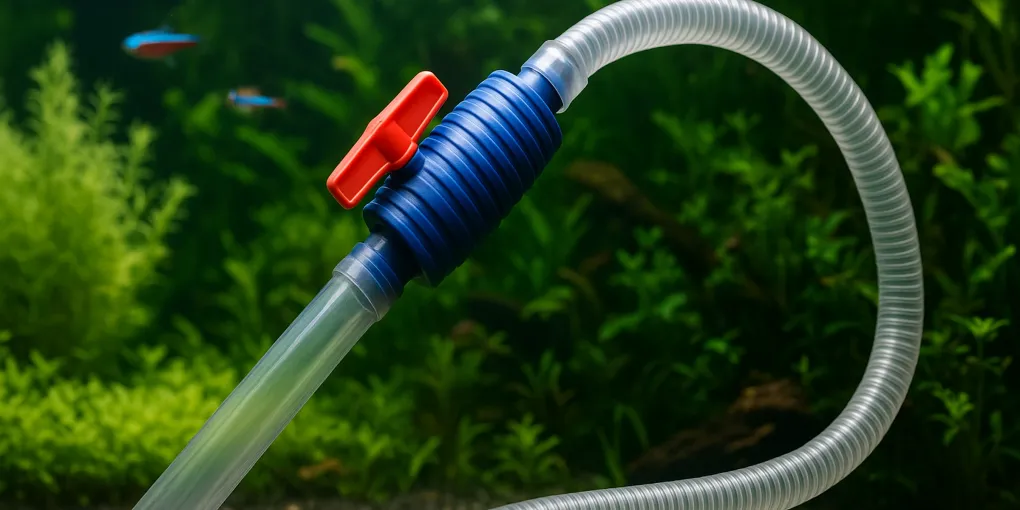
Python No Spill Clean and Fill — 50 ft
Best OverallHose Length: 50 ft
$79–$99
Quick Comparison
| Product | Key Specs | Price Range | Buy |
|---|---|---|---|
| |
| $79–$99 | Check Price |
| |
| $29–$39 | Check Price |
| |
| $149–$179 | Check Price |
| |
| $18–$25 | Check Price |
Contains affiliate links — we may earn a small commission at no extra cost to you.
Best Aquarium Automatic Water Changer in 2026
The best aquarium water changer for most hobbyists is the Python No Spill Clean and Fill System — 50 ft (PSR 4.5/5) — it eliminates buckets entirely by connecting directly to a household faucet via Venturi suction, draining old water and refilling from the tap through the same tube without lifting or carrying water. For aquarium keepers, regular water changes are the single most effective method for controlling nitrate accumulation (Hargreaves & Tucker, SRAC Publication No. 160, 2004), and the Python’s no-bucket design is the primary reason it remains the most widely-used water change system in the hobby after decades on the market.
TL;DR
- Best Overall: Python No Spill 50 ft — bidirectional faucet-connected siphon, no buckets, gravel vacuum included (PSR 4.5/5)
- Best Budget: Aqueon 25 ft — same faucet-based operation at lower cost, suitable for tanks close to the sink (PSR 4.2/5)
- Best Automated: Grech CPF-500N — pump-driven with programmable timer for truly hands-free water changes (PSR 4.3/5)
- Best Battery Vacuum: Aquatop — portable battery-powered vacuum for small tanks or spot cleaning (PSR 3.7/5)
- Key Point: Always add dechlorinator before refilling with tap water — chlorine and chloramine are acutely toxic to fish at municipal tap concentrations
How We Researched and Scored This Article
PSR evaluated aquarium water changers through a 4-step process: nitrogen cycle and water chemistry review (Hargreaves & Tucker SRAC 2004; Timmons & Ebeling 2013), product mechanism analysis (Venturi siphon vs. electric pump, flow rate review), user community synthesis (aquarium hobbyist forum reports, Amazon verified reviews), and brand/warranty assessment. PSR Composite = Safety (30%) + Efficacy & Performance (25%) + Real-World Acceptance (20%) + Value (15%) + Transparency & Brand Trust (10%).
Evidence sources: SRAC Publication No. 160 (Hargreaves, Tucker, 2004), Timmons & Ebeling “Recirculating Aquaculture” 3rd ed. (2013), Amazon verified reviews (Python 4,200+; Aqueon 6,800+; Aquatop 1,900+), manufacturer product specifications.
Why Water Changes Matter
Nitrate is the end product of the aquarium nitrogen cycle: fish waste produces ammonia → nitrifying bacteria convert to nitrite → then to nitrate. Nitrate accumulates continuously in a closed tank system and has no biological sink under normal conditions. At levels above 20 ppm, nitrate stresses sensitive species and suppresses immune function; above 40–80 ppm, most fish species show visible stress behaviors (lethargy, appetite loss, increased susceptibility to disease).
The only practical method for reducing nitrate in most home aquariums is periodic water changes — removing a portion of nitrate-laden water and replacing it with treated, low-nitrate tap water. Automated water changers make this essential maintenance task easier to execute consistently, which is the real safety benefit of the category.
Dechlorination is mandatory: US municipal tap water contains 0.2–4.0 ppm chlorine and, increasingly, chloramine (chlorine + ammonia). Both are toxic to beneficial bacterial colonies on filter media and to fish at municipal concentrations. A liquid dechlorinator (Seachem Prime, API Stress Coat) must be added to the tank immediately before refilling. Temperature matching is also important — refilling with cold tap water causes thermal shock in tropical species; allow the refill to warm to room temperature or use the faucet’s hot/cold mix.
PSR Composite Score Breakdown
| Criterion | Weight | Python 50 ft | Aqueon 25 ft | Grech CPF-500N | Aquatop Vacuum |
|---|---|---|---|---|---|
| Safety | 30% | 9.2 | 8.8 | 8.5 | 8.0 |
| Efficacy & Performance | 25% | 9.2 | 8.5 | 9.0 | 7.5 |
| Real-World Acceptance | 20% | 9.0 | 8.8 | 8.0 | 8.0 |
| Value | 15% | 8.0 | 9.2 | 6.5 | 9.5 |
| Transparency & Brand Trust | 10% | 9.5 | 8.8 | 7.5 | 7.5 |
| PSR Composite | — | 4.5/5 | 4.2/5 | 4.3/5 | 3.7/5 |
Python leads on Safety, Real-World Acceptance, and Brand Trust — established product with decades of verified performance. Grech CPF-500N leads on Efficacy for large tank operations due to pump-driven flow independent of faucet pressure. Aquatop maximizes Value for spot-cleaning use cases.
Python No Spill Clean and Fill: Best Overall
The Python No Spill Clean and Fill System has been the gold standard of aquarium water change equipment for over 30 years, and its design remains compelling: a Venturi faucet connection creates suction that pulls tank water out through a gravel tube and down the drain, then reverses to refill the tank directly from the tap — all without lifting a single bucket of water. The 50-ft hose provides enough reach for most home aquarium setups, including basement tanks, while the 10-inch acrylic gravel tube vacuums substrate debris during the drain phase.
Key specifications:
- Hose length: 50 ft PVC (25 ft and 75 ft also available)
- Gravel vacuum tube: 10 inch acrylic (also available in curved tube for planted tank care)
- Flow direction: Bidirectional — drain and refill via same faucet adaptor
- Faucet adaptor: Fits standard aerator thread (male and female adaptors included)
- Flow rate: ~3–4 gallons/minute (varies with household water pressure)
- Material: PVC hose, ABS plastic fittings — fish-safe, BPA-free
PSR Score Breakdown:
| Criterion | Weight | Score | Weighted |
|---|---|---|---|
| Safety | 30% | 9.2 | 2.76 |
| Efficacy & Performance | 25% | 9.2 | 2.30 |
| Real-World Acceptance | 20% | 9.0 | 1.80 |
| Value | 15% | 8.0 | 1.20 |
| Transparency & Brand Trust | 10% | 9.5 | 0.95 |
| PSR Composite | — | — | 4.5/5 |
Pros:
- Eliminates buckets — no lifting, no carrying, no spilling
- Bidirectional: same hose drains and refills
- 50-ft hose reaches most home setups
- Acrylic gravel tube vacuums substrate during water removal
- Decades of verified performance (4.2/5 stars, 4,200+ reviews)
- Available in 25 ft, 50 ft, and 75 ft lengths
Cons:
- Requires nearby faucet with aerator thread (adapters included for most standard faucets, but unusual fixtures may not fit)
- Flow rate depends on household water pressure — very low pressure homes may experience slower operation
- Hose kinking can occur on sharp turns; newer versions have improved kink resistance
Best for: Most home aquarium setups — freshwater and saltwater, 10 gallons to 200+ gallons.
Aqueon Aquarium Water Changer: Best Budget Siphon
The Aqueon Water Changer works on the same Venturi faucet principle as the Python but at roughly half the price for the 25-ft model. For tanks positioned within 10–12 feet of a faucet, the 25-ft hose provides adequate reach. The construction is solid and the faucet adaptor fits most US household kitchen and bathroom faucets.
PSR Score Breakdown:
| Criterion | Weight | Score | Weighted |
|---|---|---|---|
| Safety | 30% | 8.8 | 2.64 |
| Efficacy & Performance | 25% | 8.5 | 2.13 |
| Real-World Acceptance | 20% | 8.8 | 1.76 |
| Value | 15% | 9.2 | 1.38 |
| Transparency & Brand Trust | 10% | 8.8 | 0.88 |
| PSR Composite | — | — | 4.2/5 |
Pros: Half the price of Python; same faucet-based operation; excellent user reviews (6,800+). Cons: 25-ft hose limits reach for larger setups or distant sinks; fewer custom attachments available vs. Python ecosystem. Best for: Standard home aquarium setups with tanks within 10 feet of a faucet.
Grech CPF-500N Auto Water Changer: Best Automated
The Grech CPF-500N moves beyond manual siphon operation with an AC-powered pump and programmable timer, enabling genuinely hands-free scheduled water changes. The pump’s motor drives water removal and refill independent of household water pressure variation — useful for homes with low water pressure where Venturi-based systems underperform.
PSR Score Breakdown:
| Criterion | Weight | Score | Weighted |
|---|---|---|---|
| Safety | 30% | 8.5 | 2.55 |
| Efficacy & Performance | 25% | 9.0 | 2.25 |
| Real-World Acceptance | 20% | 8.0 | 1.60 |
| Value | 15% | 6.5 | 0.98 |
| Transparency & Brand Trust | 10% | 7.5 | 0.75 |
| PSR Composite | — | — | 4.3/5 |
Pros: Pump-driven operation independent of water pressure; programmable timer for scheduled automatic water changes; suitable for large (100+ gallon) tanks. Cons: $149–$179 price point is significantly higher than siphon alternatives; requires electrical outlet near the tank; setup is more complex than faucet siphons. Best for: Large tank owners (75–300+ gallons) who want programmed, scheduled water changes without manual operation.
Aquatop Universal Gravel Vacuum: Best Battery Vacuum
The Aquatop battery-powered gravel vacuum is a spot-cleaning tool rather than a full water change system — it’s optimized for small tanks (up to 20 gallons) or for targeted substrate cleaning between full water changes. At under $25 and requiring no faucet access, it is the most accessible entry point for gravel cleaning.
PSR Score Breakdown:
| Criterion | Weight | Score | Weighted |
|---|---|---|---|
| Safety | 30% | 8.0 | 2.40 |
| Efficacy & Performance | 25% | 7.5 | 1.88 |
| Real-World Acceptance | 20% | 8.0 | 1.60 |
| Value | 15% | 9.5 | 1.43 |
| Transparency & Brand Trust | 10% | 7.5 | 0.75 |
| PSR Composite | — | — | 3.7/5 |
Pros: No faucet access needed; battery-powered portability; lowest cost; effective for spot cleaning. Cons: Drain-only (no refill function); 3.9-ft hose limits reach; battery life limits session duration; not practical for tanks over 20 gallons. Best for: Small tanks (5–20 gallons), desktop aquariums, or between-change spot cleaning.
Frequently Asked Questions
How often should I change aquarium water?
For most freshwater aquariums, changing 25–30% of tank volume weekly maintains nitrate at safe levels for most fish species (Hargreaves & Tucker, SRAC Publication No. 160, 2004). Heavily stocked tanks, goldfish tanks, and tanks with sensitive species (discus, altum angelfish) benefit from twice-weekly 20% changes. Regular nitrate testing with an API Freshwater Master Test Kit is the most reliable way to calibrate your specific change frequency — target nitrate below 20 ppm for most tropical fish.
Do I need a specific faucet to use a Python or Aqueon water changer?
Both systems use a faucet adaptor that fits standard US threaded aerators (male and female thread). Most kitchen and bathroom faucets are compatible. Non-standard faucets (pull-out spray heads, faucets without aerators, some European-thread fixtures) may require an additional adaptor. Python and Aqueon both include multiple adaptor types in the package to cover common US faucet variations.
Can I use a water changer with a saltwater reef tank?
Yes — water changers are widely used in reef aquariums. In reef tanks, refill water must be pre-mixed saltwater (RODI water + marine salt) at the correct salinity, not direct tap water. Prepare saltwater in a mixing container first, then use the water changer to pump or siphon it into the tank. The faucet-connection models like Python and Aqueon can also be used to pump from a saltwater bucket into the tank by connecting the faucet adaptor to a submersible pump.
How much water should I remove during a water change?
For most home aquariums, 25–30% of total tank volume per weekly change is the standard guideline (SRAC Publication No. 160, 2004). For a 55-gallon tank, that is approximately 13–17 gallons per change. Avoid removing more than 50% of tank volume in a single change — large volume swings can stress fish through sudden changes in water chemistry, temperature, and pH that a more gradual replacement would buffer.
What causes cloudy water between water changes?
Cloudy water in an established aquarium most often indicates a bacterial bloom (from overfeeding, uneaten food decomposing), a disturbance of the substrate releasing trapped organics, or a recent filter cleaning that reduced beneficial bacteria. Increase water change frequency temporarily, reduce feeding, and allow the biological filtration to stabilize. Persistent cloudiness despite water changes may indicate ammonia or nitrite spikes — test immediately and perform emergency water changes if levels are elevated.
Bottom Line
The Python No Spill Clean and Fill — 50 ft (PSR 4.5/5) is the definitive aquarium water change system for most home aquarists — its no-bucket bidirectional design has proven itself over decades of widespread use, and the 50-ft hose provides the flexibility needed for most home setups. The investment pays off immediately in reduced maintenance effort and improved water change adherence.
The Aqueon Aquarium Water Changer (PSR 4.2/5) is the best value choice for smaller setups or shorter distances to the faucet. The Grech CPF-500N (PSR 4.3/5) is the right choice for large tank owners who want truly automated scheduled water changes. Always add dechlorinator (Seachem Prime or equivalent) before refilling with tap water.
Frequently Asked Questions
- For most freshwater aquariums, changing 25–30% of the tank volume weekly is the standard recommendation for maintaining water quality (Hargreaves & Tucker, SRAC Publication, 2004). Tanks with heavy bioloads (many fish, overstocked), planted tanks without CO2, and goldfish tanks may benefit from twice-weekly 20% changes. Reef saltwater tanks typically follow 10–15% biweekly changes with specific salt mix matching. Regular water testing with an API Master Test Kit helps determine if your change schedule is adequate.
- No — filters should remain running during water changes. Turning off the filter exposes beneficial bacteria colonies on filter media to air, which can cause partial die-off and a temporary ammonia spike. The Python and Aqueon faucet-attached changers create a slow, gentle water draw that doesn't disturb filter intake. The exception: if your filter intake could become exposed when water level drops significantly, reduce water change volume to keep the intake submerged.
- Yes — the Python No Spill and Aqueon water changers use the same faucet connection to both drain and refill the tank. The refill direction flows treated tap water directly into the aquarium. However: you must add liquid dechlorinator (sodium thiosulfate, such as Seachem Prime) to the tank immediately before refilling, or pre-treat the water before it enters. Chlorine and chloramine in tap water are toxic to fish at municipal concentrations. Temperature matching is also important — cold tap water refills can cause thermal shock in sensitive tropical species.
- Measure the distance from your aquarium to the nearest sink or drain, then add 15 feet for slack and maneuvering around furniture. A 25-ft hose works for most standard setups (tank within 10 feet of a faucet). A 50-ft hose is recommended for tanks further from the sink, basement setups, or large tanks where you'll be moving around the tank perimeter. The Python is available in 25-ft, 50-ft, and 75-ft hose lengths — the 50-ft model covers the majority of home setups.
- Faucet-based changers (Python, Aqueon) create a gentle Venturi suction that draws water slowly enough to allow fish to move away from the gravel tube. The gravel vacuum function lifts debris from the substrate without uprooting well-established plants or severely disrupting fish. Fine substrates (sand, fine gravel) require careful technique — hover the gravel tube slightly above the substrate rather than pressing it into the sand. Large fish may investigate the gravel tube out of curiosity; this does not harm them.