Why Cats Need Scratching Posts: Nail Care, Stretching, Territory, and Better Buying Choices
Evidence ExplainerQuick picks
Tall sisal scratching post
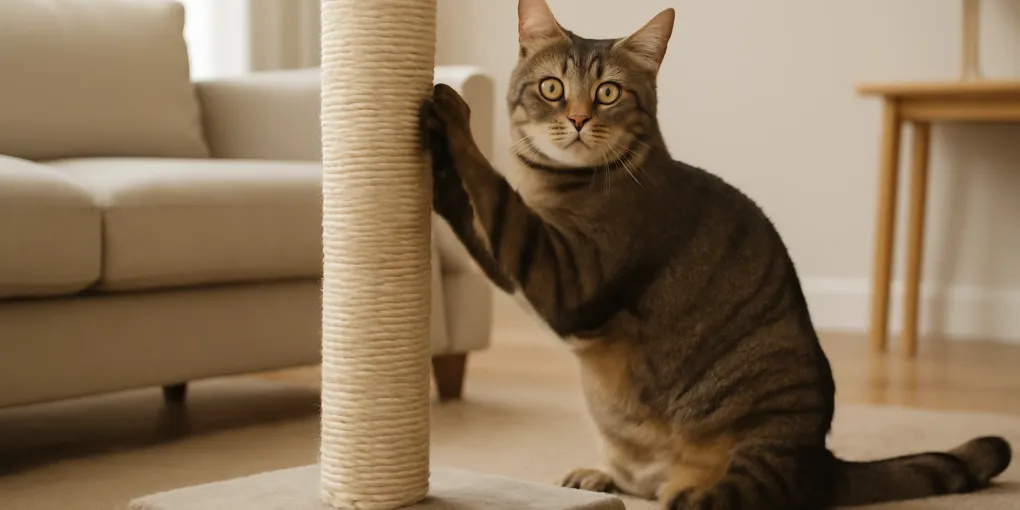
★ Top pick- Why consider it: Best first post for adult cats who want a full-body vertical stretch near a sofa or hallway route.
Horizontal cardboard scratcher
- Why consider it: Best companion scratcher for cats who attack rugs, low furniture edges, or floor-level textures.
Wall-mounted cat scratcher
- Why consider it: Best for small apartments when the mount can be anchored securely at the cat's full stretch height.
Cats scratch because scratching is normal feline behavior, not because they are trying to ruin furniture. A useful scratching setup gives the cat a legal place to stretch, mark territory, condition claws, and release arousal after sleep or play. The wrong setup, such as a short wobbly post hidden in a spare room, teaches the owner that posts do not work when the real problem is poor fit.
Quick picks for cat scratching setups
- Search Amazon for tall sisal cat scratching posts.
- Compare horizontal cardboard cat scratchers on Amazon.
- See wall-mounted sisal cat scratchers on Amazon.
For a complete indoor setup, pair scratching options with vertical cat space and cat puzzle feeding instead of treating one post as the whole enrichment plan.
What scratching does for cats
Scratching leaves both visual marks and scent from glands in the paws. It also lets the cat stretch the shoulders, back, and forelimbs after rest. The claw action can loosen outer claw sheaths, which is why you may find crescent-shaped husks near favored scratching spots.
That does not mean scratching posts replace nail care. Senior cats, low-activity cats, and cats with arthritis can develop thick or overgrown claws if nobody checks them. A post supports normal use; it does not guarantee safe nail length.
Evidence and behavior reality
Veterinary and shelter behavior resources consistently treat scratching as a normal, species-typical behavior that should be redirected rather than punished. The practical evidence is strongest for environmental fit: cats use scratchers more readily when they are stable, placed where scratching already happens, and matched to the cat’s preferred angle and texture.
Punishment is a weak strategy because it does not give the cat a legal outlet. It can also make the cat scratch when people are absent. A better plan is to block the damaged surface temporarily, place the preferred scratcher beside it, reward use, and keep the scratcher where the cat already travels.
Choose height before color
Many posts fail because they are too short. An adult cat often wants to reach up, extend the front legs, and pull downward with body weight. A 16-inch decorative post may be fine for a kitten but useless for a long adult cat.
Look for a broad base that does not rock. If the post tips the first time the cat pulls, the cat may avoid it afterward. For wall-mounted scratchers, use the hardware and anchors appropriate for the wall type; adhesive-only panels can fall and scare the cat.
Match texture to the target
If your cat scratches sofa corners, start with a tall vertical sisal post near that corner. If the cat scratches rugs, try a horizontal cardboard or sisal mat. If the cat scratches door trim, a wall-mounted vertical panel may be better than a freestanding post.
Carpet-covered posts are not automatically wrong, but they can blur the line between allowed scratching and household carpet. Sisal rope, woven sisal fabric, cardboard, and wood-textured scratchers give clearer alternatives for many homes.
Placement beats perfect product specs
Put the scratcher where the cat already scratches, wakes up, passes through, or greets people. Cats often scratch after naps and near social areas. A post hidden behind a laundry basket is less useful than a slightly less attractive post beside the sofa arm the cat already targets.
Once the cat uses the new scratcher reliably, you can move it a few inches at a time if needed. Moving it across the room immediately often restarts the furniture problem.
When scratching changes suddenly
A sudden change in scratching can be information. A cat that stops scratching may have pain, nail overgrowth, illness, or stress. A cat that suddenly scratches doors, windows, or walls may be responding to outdoor cats, household conflict, or anxiety.
Check claws, paws, and gait. If you see bleeding, swelling, limping, excessive licking, or a claw growing into the pad, call a veterinarian. Behavior advice cannot fix a painful paw.
A simple first-week setup
Put one tall vertical sisal post beside the main scratched object and one horizontal cardboard scratcher near a resting area. Rub a little catnip on the scratcher only if your cat responds well to catnip; not every cat does. Reward the first few legal scratches with calm praise or a treat, then leave the scratcher available without turning it into a forced training session.
Cover the damaged sofa corner temporarily with a smooth protective cover, double-sided furniture-safe tape, or another texture the cat does not enjoy. The goal is not to trap the cat. The goal is to make the legal surface easier and more satisfying than the old target.
Better buying choices for different cats
For a young adult cat who races through the living room, buy the tallest stable sisal post your space can handle and place it near the route the cat already uses. For a senior cat, add a lower horizontal scratcher near a warm resting spot so the cat does not need to rear up every time. For a large cat, weight and base width matter more than decorative platforms.
For multi-cat homes, buy more than one legal surface. A single post can become a guarded resource if one cat controls the sofa area or hallway. Put scratchers near separate resting zones and entrances so a timid cat is not forced to pass a confident cat to use the only acceptable target.
Replace scratchers when they become unstable, slick, or so shredded that the cat cannot get satisfying resistance. A worn cardboard insert can be cheaper to replace than a whole post, while a wobbly vertical post should be repaired or removed before it scares the cat away from the location.
FAQ
Do scratching posts trim cat nails by themselves?
They help cats shed outer claw sheaths and use claws normally, but many indoor cats still need nail checks and trimming. A post is not a substitute for monitoring overgrown claws, especially in senior or low-activity cats.
Why does my cat scratch the sofa when a post is available?
The post may be too short, wobbly, hidden in the wrong room, or covered in a texture the cat dislikes. Put a stable scratcher beside the targeted sofa area before gradually moving it.
Is sisal better than carpet for cat scratching posts?
Sisal is often better for vertical posts because it gives claws resistance without teaching the cat that household carpet is the target. Some cats still prefer cardboard, wood-like textures, or horizontal pads.
How tall should a cat scratching post be?
For most adult cats, choose a post tall enough for a full stretch with forelegs extended above the shoulders. Short kitten posts often become too small for adult cats.
Sources
- ASPCA. Destructive scratching and cat behavior guidance: https://www.aspca.org/pet-care/cat-care/common-cat-behavior-issues/destructive-scratching
- International Cat Care. Scratching behavior and providing acceptable outlets: https://icatcare.org/advice/scratching-on-furniture-and-carpets/
- Cornell Feline Health Center. Cat health and owner observation context: https://www.vet.cornell.edu/departments-centers-and-institutes/cornell-feline-health-center/health-information