Why Indoor Cats Need Vertical Space: Shelves, Trees, and Safer Perches
Evidence ExplainerQuick picks
| Product | Key Specs |
|---|---|
| See price on Amazon |
|
| See price on Amazon |
|
| See price on Amazon |
|
Product availability, certifications, and retailer details can change; check the current Amazon page before buying.
Direct answer
Indoor cats need vertical space because height gives them choice: observation, retreat, escape routes, and a way to share rooms without constant face-to-face contact. A good perch is not decoration. It is part of the cat’s resource map, along with food, water, litter, scratching, rest, and play.
Vertical space is especially useful in apartments, multi-cat homes, and homes with dogs or children. The best product depends on the cat’s age, confidence, body size, and the wall or floor you can safely use.
Shelf, tree, and perch options
- Search Amazon for wall-mounted cat shelves if you can anchor into studs and design a route up and down.
- Search Amazon for heavy-base cat trees if you rent or want a reversible first setup.
- Search Amazon for supported window perches if your cat likes watching birds, sidewalks, or household movement from a safe height.
How we evaluated the options
| Factor | Weight | What mattered | Cat-specific application |
|---|---|---|---|
| Research | 30% | Fit with feline environmental-needs guidance | Height, safe retreat, scratching, and separated resources guided the recommendations. |
| Evidence Quality | 25% | Specific welfare rationale | We focused on choice and conflict reduction, not vague enrichment claims. |
| Value | 20% | Usable climbing area per dollar | Stable platforms and washable surfaces mattered more than novelty shapes. |
| User Signals | 15% | Repeated failure reports | Wobble, undersized beds, carpet shedding, and weak hardware were key negatives. |
| Transparency | 10% | Weight ratings and hardware clarity | Products with clear dimensions and mounting instructions are easier to judge. |
Why height changes cat behavior
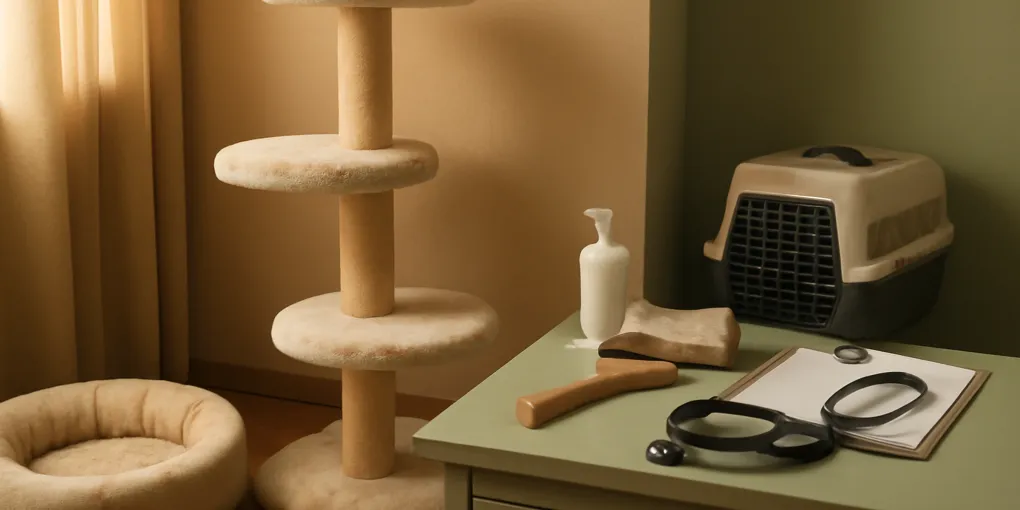
Cats use height to monitor a room without standing in the traffic lane between the sofa, food bowl, and hallway. A window perch can let a shy cat watch guests from above the couch. A three-level tree beside a scratcher can redirect a young cat away from curtain rods and refrigerator tops. In a one-bedroom apartment, two shelf routes spaced with reachable landings can give a cat more usable territory than another floor bed.
The important detail is choice, not just altitude. One high bed in a dead-end corner can become a trap if another cat blocks the exit. A better setup has multiple levels, a stable landing, and a way down that does not require jumping into a dog’s path. For heavy cats, that means broad platforms and real brackets; for senior cats, it means lower steps, ramps, and traction instead of narrow wall pegs.
Wall shelves vs cat trees vs window perches
Wall shelves are the cleanest way to build a route, but only if they are anchored correctly. Use studs or hardware rated for dynamic jumping loads, not just static weight. Make the steps close enough for the cat’s age and body. Senior cats, arthritic cats, and short-legged cats may need ramps or lower intervals.
Cat trees are easier for renters. Choose a broad base, platforms large enough for the cat’s full body, and scratching surfaces that do not shed staples or loose fibers. A tall tree with a tiny top cup may look impressive online and fail an adult cat that wants to stretch out.
Window perches add outdoor observation, but heat and hardware matter. Check suction cups, brackets, and window temperature. A sunny perch can become too warm, especially for senior cats or cats with respiratory disease.
Multi-cat placement
In multi-cat homes, do not create one throne. Create routes. Put perches in more than one room and avoid placing the only desirable perch above a single food bowl or litter path. Each cat should be able to leave without walking through another cat’s resting spot.
If conflict is already present, add vertical space alongside resource separation. More height will not fix a home where one cat controls all litter boxes or food stations.
Safety checks before installation
Measure the cat, not just the room. Platform depth should fit the cat’s body. Check wall material, hardware, base wobble, fabric traction, and cleaning access. Push-test freestanding trees from several angles. Inspect shelves after the first week and then monthly.
Avoid isolated high shelves for kittens, seniors with mobility loss, cats recovering from surgery, and cats with balance problems. For those cats, use lower platforms, ramps, and soft landing zones.
FAQ
Is a cat tree enough vertical space for one indoor cat?
Often, yes, if it is stable, large enough, and placed where the cat wants to spend time. A tree hidden in a spare room may get less use than a lower perch near the household’s normal activity.
Are wall shelves safe for large cats?
They can be safe when anchored into appropriate wall structure with hardware rated beyond the cat’s body weight and jumping force. Adhesive-only shelves are a poor choice for large or fast-launching cats.
What if my cat ignores the new perch?
Move it near an existing favorite window or resting route, add a familiar blanket, and use play to guide the cat up. For broader home setup, pair this with our senior cat care protocol if age or mobility may be changing the cat’s choices.
Sources
- AAFP/ISFM environmental needs guidance explains why cats need safe places, separated resources, and environmental choice: https://pmc.ncbi.nlm.nih.gov/articles/PMC7415620/
- Ohio State Indoor Pet Initiative summarizes core indoor cat needs, including environmental resources and safe spaces: https://indoorpet.osu.edu/cats/basic-indoor-cat-needs
- Cat Friendly Homes discusses play and environmental engagement for indoor cats: https://catfriendly.com/be-a-cat-friendly-caregiver/playing-with-your-cat/
Bottom line
Vertical space works when it is stable, reachable, and part of a route. Buy the shelf, tree, or perch that your specific cat can enter, use, and leave safely, then place it where it solves a real household problem.