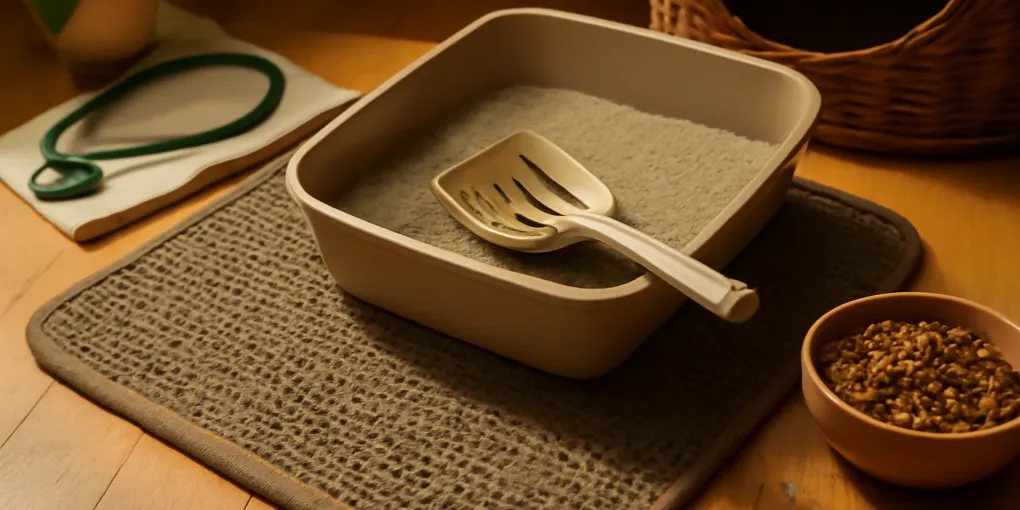
Gorilla Grip honeycomb litter mat
$20-$35
Quick picks
| Product | Key Specs | Pros / Cons |
|---|---|---|
| See price on Amazon | — |
|
| See price on Amazon | — |
|
| See price on Amazon | — |
|
Product availability, certifications, and retailer details can change; check the current Amazon page before buying.
Direct answer
The best cat litter mat is the one your cat will actually step on for the first two steps after leaving the box. Honeycomb mats trap clay granules well, but a flatter textured mat may be better for a cat that avoids bumpy surfaces.
For most tracking problems, start with Search Amazon for Gorilla Grip honeycomb litter mat in a size that extends beyond the box exit. If your cat leaps over it, switch to a softer low-profile mat rather than forcing a texture that changes litter-box behavior.
How to judge a cat litter mat
| Factor | Weight | Score | Why it matters for tracking |
|---|---|---|---|
| Research | 30% | 7.5 | Litter hygiene and box access guidance is stronger than mat-specific trials. |
| Evidence quality | 25% | 7.0 | The decision depends on paw feel, litter type, and cleaning behavior. |
| Value | 20% | 8.5 | A good mat is cheaper than changing flooring or replacing the whole box. |
| User signals | 15% | 8.0 | Avoidance and jumping over the mat are the key owner-observed failures. |
| Transparency | 10% | 8.5 | No mat fixes a too-small, dirty, or badly placed box. |
| Overall fit | 7.8/10 | Useful when sized around the exit path and cleaned often enough. |
Quick picks by litter-box setup
- Search Amazon for Gorilla Grip honeycomb litter mat for clay litter that scatters across hard floors.
- Search Amazon for Pieviev litter mat if you want a double-layer pocket you can open and dump.
- Search Amazon for PetFusion ToughGrip mat for cats that dislike deep holes or raised ridges.
Size matters more than brand
Measure from the litter-box exit to the place where the cat’s second step lands. A tiny mat centered under the door catches less than a plain runner placed along the real exit path. Large open boxes often need a mat on the long side, not only in front.
If you use a top-entry box, place the mat where the cat lands after jumping down. If the box is inside furniture, check whether the mat makes the opening feel cramped. A tracking fix should never make the cat hesitate to enter the box.
Match the mat to the litter
Fine clumping clay needs texture or a honeycomb pocket. Large pellets often need a flatter mat with enough surface area because pellets roll rather than sift. Crystal litter can feel sharp in deep grooves, so watch whether the cat starts stepping around the mat.
A mat with raised edges helps only if the cat exits across it. If your cat launches over the edge, the raised border can become one more obstacle.
Cleaning routine that prevents odor
Shake the mat into a trash bag or back into the box only if the litter is clean and dry. For honeycomb mats, open the top layer and dump trapped granules before they break into dust; for low-profile PVC mats, vacuum with the brush roll off so damp clay does not smear into the grooves. Wash with mild soap when clumps, urine, or odor collect. Let the mat dry fully before putting it back; damp grooves can hold odor and make paws dirty.
If odor returns within a day, the mat is probably catching wet litter or sitting under a box seam. Move it to the exit path only, trim any overhang that curls under the box, or switch to a washable runner you can launder weekly.
For larger hygiene problems, pair the mat with better box upkeep. Our cat litter replacement guide explains when adding gadgets is less useful than replacing soiled litter and washing the box.
What not to buy
Avoid mats with a chemical smell that does not fade after airing out. Skip stiff plastic spikes for cats with sensitive paws, seniors, or declawed cats. Do not buy a mat that blocks a senior cat’s low-entry route or creates a slippery edge on tile.
If your cat already has litter-box avoidance, solve the medical, cleanliness, and access questions first. A mat can reduce tracking, but it cannot compensate for pain, stress, or a box the cat dislikes.
Cat litter mat FAQ
Do litter mats work with pellet litter?
They help less than with clay because pellets roll and do not fall through small holes as easily. Use a larger low-profile mat or runner.
Can a litter mat cause box avoidance?
Yes. If the texture hurts or the mat narrows the entrance, some cats jump around it or avoid the area. Watch behavior after any change.
Should I put the mat under the whole box?
Only if the box stays level and stable. Usually the exit path matters more than the hidden area under the box.
Is a washable rug better than a litter mat?
For some cats, yes. A low-pile washable runner can be a better compromise when honeycomb texture causes avoidance.
Buyer checklist before checkout
Measure the real exit route first. A mat that is too small becomes a decorative rectangle beside the mess. For most boxes, the useful size starts at the first paw landing and extends far enough for two slow steps. If your cat sprints out of the box, choose a longer runner shape rather than the thickest honeycomb mat.
Check the underside too. On tile or sealed wood, a mat that slides can scare a cat and spread litter farther. Look for a grippy base, but avoid sticky backings that trap moisture or damage flooring. If the mat will sit near a bathroom, laundry room, or basement drain, make sure it can dry flat after washing.
Which mat for which litter
Clumping clay usually pairs best with a honeycomb or pocket mat because the small grains can fall into the openings before they reach the hallway. With lightweight clay, prioritize coverage: a 30-by-24-inch pocket mat may outperform a 23-by-17-inch deep-trap mat because dusty grains cling to paw fur and float past the first step. If you use pellet, paper, tofu, pine, or grass litter, choose a 30-by-48-inch low-profile washable runner or ribbed PVC mat; the larger pieces often sit on top of honeycomb holes instead of dropping through.
Texture matters more for long-haired cats. Litter caught in toe fur may not fall off until the cat reaches a hallway rug or bed, so a larger exit runner plus gentle paw-fur trimming can work better than harsher spikes. For a narrow bathroom, a flexible Gorilla Grip-style honeycomb mat is easier to fold and empty than a rigid tray; for a senior cat, a PetFusion-style flat mat is safer than high spikes. If your cat hesitates, jumps, or starts using a different route after the mat arrives, return the high-texture mat and switch to a flatter washable option.
Placement examples that actually work
For a covered front-entry box, put a 30-inch-wide Gorilla Grip or Pieviev-style mat long-side-out from the doorway so the cat cannot step around it in one stride. For an open box against a wall, cover the side the cat already uses, not the side you wish the cat used. For a corner setup, an L-shaped combination of a pocket mat at the exit and a washable runner along the hallway often catches more than one expensive square.
If the box sits inside furniture, avoid thick mats that raise the entrance, catch the cabinet door, or narrow a senior cat’s turn radius. A PetFusion ToughGrip-style flat mat is usually safer in a cubby than a high-lip honeycomb tray. Check the mat after 24 hours: if litter is still appearing beyond the second paw step, rotate the mat 90 degrees or add runner length instead of buying a rougher texture.
Multi-cat and senior-cat cautions
Multi-cat homes need more than one clean exit path. If one cat guards the mat or blocks the box doorway, the other cat may avoid the box entirely. Place mats so a cat can leave without being trapped against a wall.
Senior cats need traction and low edges. A high-lip mat may catch stiff paws, and a slippery bottom can make the cat associate the litter area with instability. If tracking increased after arthritis signs appeared, the real fix may be a lower box entrance and a softer mat, not a harsher texture.
Odor and dust tradeoffs
A mat that catches more litter also catches more dust. If you use scented clay or very fine clumping litter, a deep honeycomb mat can hold powder in the lower pocket. That dust may smell stale even when the visible floor looks cleaner. Empty and rinse the pocket before deciding the whole litter brand has failed.
Unscented litter still needs mat hygiene. Urine-soaked granules can fall into a pocket and sit there until the next wash. If the mat smells when you lift it, the cleaning interval is too long or the box exit is placed where damp litter lands repeatedly.
Return-policy details that matter
Keep the packaging until the cat has used the mat for a week. The first day may look successful because the cat is curious; the real test is whether the cat keeps stepping on it when the box is dirty, the household is busy, and the mat has normal dust in the texture.
Also check whether the mat can be cleaned in the place you actually have. A bulky pocket mat is less useful if it must be carried through the apartment dripping litter dust. For small bathrooms, a lighter mat that folds over a trash bag may be the product you clean often enough.
If the cat jumps over the mat, try rotating it, moving it closer to the actual exit, or switching texture. Do not keep a mat that changes the cat’s route to a sofa, bed, or laundry basket. A tracking product is a failure if it protects the floor by making the cat avoid the litter area. The keeper test is simple: the cat uses the box normally, the mat can be cleaned without a chore spiral, and the first visible trail of litter stops before the living space. In a small apartment, that may be enough to choose a washable runner over a deeper trap mat.
Sources
- International Cat Care: Litter trays and toileting
- Cornell Feline Health Center: Feline house-soiling
- Ohio State Indoor Pet Initiative: Basic indoor cat needs
Frequently Asked Questions
- Choose a mat wide enough for the cat's first two steps after exiting the box, not just the footprint of the doorway.
- Most cats tolerate them, but switch to a flatter texture if your cat jumps over the mat or avoids the box area.
- Shake or vacuum it several times a week and wash when dust, odor, or damp clumps collect in the texture.