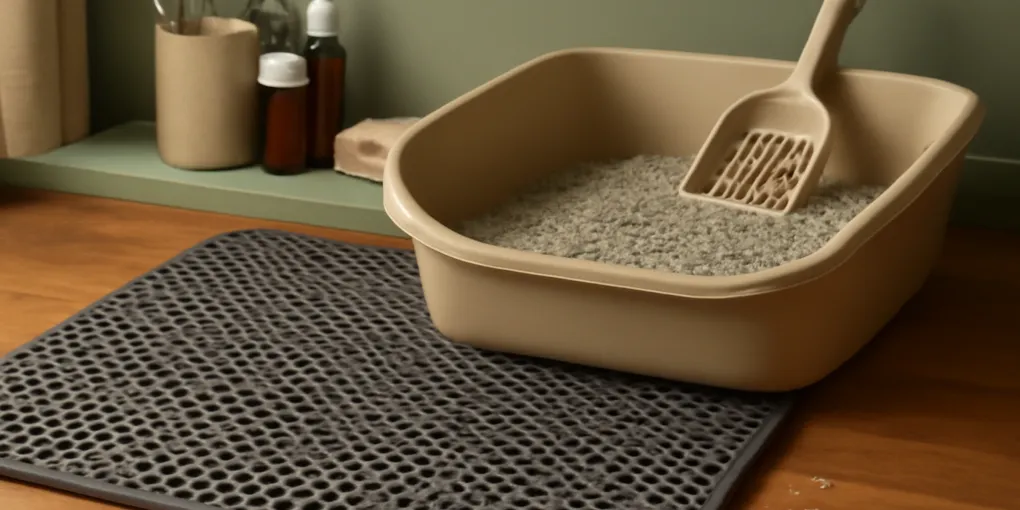
Gorilla Grip Thick Cat Litter Trapping Mat
Best soft textured matBest for: Cats that dislike hard honeycomb surfaces
$18-$35
Quick picks
| Product | Key Specs |
|---|---|
| See price on Amazon |
|
| See price on Amazon |
|
| See price on Amazon |
|
Product availability, certifications, and retailer details can change; check the current Amazon page before buying.
The best cat litter mat is not simply the one with the deepest holes. It is the mat your cat will actually step on after leaving the box. Heavy-tracking homes often need a double-layer honeycomb mat. Texture-sensitive cats may do better with a softer loop mat that catches less litter per step but does not make them leap over it.
Start with the litter type and the exit path. Fine clumping clay rides between toes and needs surface texture. Large pellets bounce and need a wider landing zone. Covered boxes with a front exit need a long mat. Open boxes may need an L-shaped layout or two mats because cats leave from the side.
Quick picks by litter problem
- Gorilla Grip Thick Cat Litter Trapping Mat - best first try when you need a softer surface that most cats will tolerate. Search Amazon for Gorilla Grip mat.
- Pieviev Double-Layer Honeycomb Litter Mat - best for visible scatter from clumping clay or pellet litter if your cat accepts a firmer step. Search Amazon for a honeycomb litter mat.
- iPrimio Cat Litter Trapper Mat - best when waterproof backing and washable layers matter more than lowest price. Search Amazon for iPrimio mat.
Match the mat to your litter type
Fine clumping clay needs texture because small granules cling to paw fur and spread beyond the litter room. A honeycomb or thick loop mat near the exit is useful, but size matters more than a clever pattern. If your cat takes two steps and jumps over the mat, buy a longer runner.
Large pellet litter behaves differently. Pellets roll and bounce, so a mat with a raised lip or wide footprint may help more than tiny holes. Deep honeycomb openings can catch pellets, but some pellet users prefer a soft mat that is easier to shake outside.
Lightweight litter tracks farthest because it sticks to paws and floats out of the box. Use a larger mat and consider a higher-sided litter box if your cat is also kicking litter during digging.
Litter box acceptance matters more than a spotless floor. The AAFP/ISFM environmental needs guidelines emphasize that cats need easy access to appropriate resources and can be sensitive to changes in their environment (PubMed summary). A mat that makes the approach uncomfortable can undermine the whole setup.
How to choose the right surface
A good litter mat should solve three problems at once: catch the litter, stay flat, and clean without holding odor. Here is how the main styles differ.
Soft loop mats
Soft mats are the safest starting point for cats that dislike new textures. They catch less litter than a deep honeycomb mat, but cats are more likely to walk across them normally. Choose a dense, low-pile texture rather than a shaggy bathroom rug, which can hold urine smell and be hard to rinse clean.
Double-layer honeycomb mats
Honeycomb mats catch granules in the top holes and let them fall into a lower layer. They work well when your main problem is a pile of litter immediately outside the box. The tradeoff is texture: some cats step around them, and the mat has to be opened and dried fully after washing.
Waterproof backed mats
A waterproof layer is useful if your litter box sits on wood, laminate, or a laundry-room transition where damp litter can damage flooring. Waterproof does not mean self-cleaning. Rinse both sides, dry the mat fully, and avoid strong cleaners that leave scent near the box.
Size and layout examples
A mat can have the right texture and still fail if it is too small. For a covered box with a front door, use the longest side of the mat in the direction your cat exits. For an open box, watch your cat for one day before buying: many cats step out over a side wall instead of using the front edge you expected.
Small bathroom setups usually need a narrow runner rather than a square mat. Put the runner where the cat’s second, third, and fourth steps land. The first step may still drop litter inside the box lip; the tracking trail usually starts after the cat has fully cleared the box.
For multi-cat homes, avoid placing one stiff mat in a bottleneck between boxes. A cat that has to cross a texture it dislikes to reach the only box may delay using it. Two moderate mats under two separate boxes are often better than one aggressive mat under the busiest box.
Cleaning routine that prevents odor
Litter mats fail quietly when they become dusty, damp, or scented. Shake or vacuum the mat daily during the first week so your cat learns that the surface stays clean. For washable mats, rinse with mild unscented soap, then dry completely before putting the mat back. Trapped damp litter can smell worse than the scatter you were trying to control.
Do not spray strong deodorizer on a mat near the box. Cats rely heavily on scent, and a perfume-heavy mat can make the box area feel wrong. If odor is the reason you are shopping for a mat, first check scooping frequency, box size, and litter depth. A mat catches granules; it does not fix a box that is too dirty or too small. If you see damp clumps stuck inside a honeycomb layer, clean sooner rather than waiting for weekly chores. That residue can make the approach smell like a dirty box even when the box itself has been scooped.
When to skip a mat and change the box instead
A mat is not the right first fix if your cat kicks litter over the walls during digging. In that case, a higher-sided open box or a larger box may reduce scatter more than any floor product. Likewise, if litter appears several rooms away, the issue may be lightweight litter stuck in paw fur. A heavier clumping litter or pellet transition may help, but change litter gradually so you do not create box avoidance.
For senior cats or cats with arthritis, keep entry height and footing in mind. A thick mat with raised edges can become an obstacle. Choose a flatter soft mat and prioritize easy box access over maximum trapping.
Product notes
Gorilla Grip Thick Cat Litter Trapping Mat is the most forgiving first buy. It sits flat, vacuums easily, and feels less aggressive under paws than hard honeycomb mats. It is the right choice for cats that have already rejected spiky mats or plastic runners.
Pieviev Double-Layer Honeycomb Litter Mat is better for owners who sweep a pile of clay litter every day. The double layer makes cleanup more deliberate: open it, pour captured litter into the trash, then rinse as needed. It is not ideal for cats that jump over unfamiliar surfaces.
iPrimio Cat Litter Trapper Mat costs more, but the waterproof build makes sense near flooring seams or in small apartments where the litter box shares space with laundry. The main caveat is drying time. Do not put a damp mat back under the box.
Placement fixes before you buy a second mat
- Turn the box so the main exit points onto the longest part of the mat.
- Leave enough bare floor around the box that the mat does not wobble under the box edge.
- Use a mat at least one cat body length in the exit direction.
- If your cat exits from two sides, use two smaller mats rather than one tiny front mat.
- Vacuum daily for the first week so the new mat does not become a gritty surface your cat avoids.
If your cat suddenly stops using the box, treat that as a health or stress signal, not a mat-shopping problem. Remove the new mat, restore the old setup, and contact your veterinarian if the change continues. For a separate enrichment setup away from the litter area, see the indoor cat puzzle feeder plan.
FAQ
Which mat surface catches fine clumping litter best?
Honeycomb mats usually catch more fine clumping granules per step when the cat will walk across them. Soft mats are better when the cat avoids firm textures. The best mat is the one that covers the actual exit path without changing box access.
How large should a cat litter mat be?
Plan for at least one full cat body length from the exit. For big cats or covered boxes with a straight front exit, a runner-style mat often works better than a small rectangle.
Can I use a bathroom rug instead?
A bathroom rug can catch some litter, but it may hold odor and moisture. If you use one, choose a low-pile washable rug, skip scented detergents, and dry it fully before returning it to the litter area.
Bottom line
Choose a soft loop mat if cat acceptance is uncertain, a double-layer honeycomb mat if daily scatter is heavy, and a waterproof premium mat if the box sits near vulnerable flooring. Size and placement matter as much as surface pattern. Recheck the setup after a week, because the best evidence is the trail your own cat leaves on the floor.