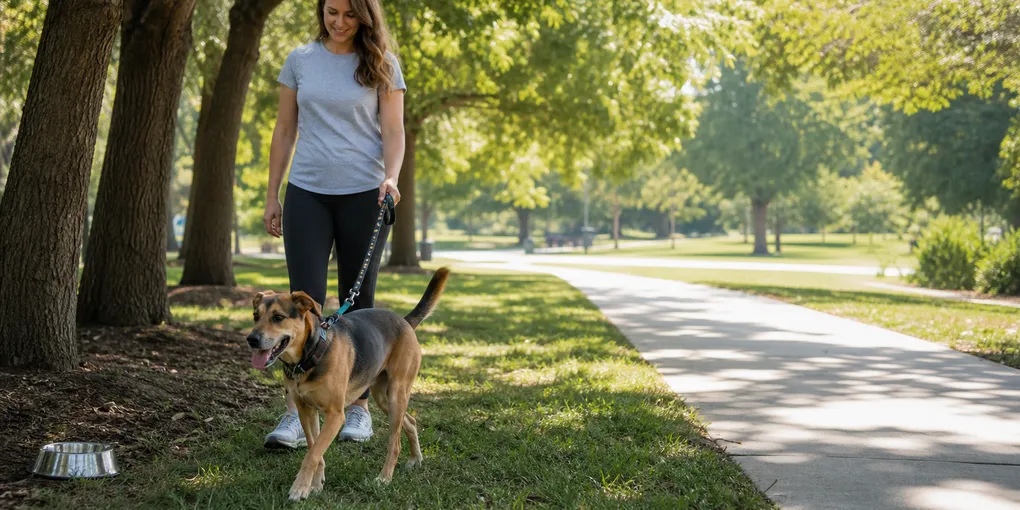
Hot Pavement and Dog Paw Burns: A Safer Summer Walk Plan
Evidence ExplainerDogs do not have shoes, and a pavement route can become far hotter than the air around it. Asphalt, artificial turf, sand, metal grates, and dark concrete all absorb sun differently. Instead of relying on a single air-temperature rule, make the route decision from the actual surface, the shade available, your dog’s risk factors, and a willingness to turn around.
The American Kennel Club advises that pavement can burn pads and recommends walking in the early morning or later evening, using grass or dirt during extreme heat. That is a practical starting point, not permission to push through a walk when a dog is already panting hard or the route feels uncomfortable.
Test the route before your dog is committed to it
Stand in the shade where you plan to walk, then check the surfaces your dog will actually use: the driveway, parking lot, sidewalk, trail bridge, and artificial turf. The common “hand test” is only a screen. If you cannot comfortably keep the back of your hand on the surface for several seconds, choose a cooler route. Do not use the test to prove a marginal surface is safe.
Prefer shaded grass, packed dirt, or a tree-lined path, and carry water for longer outings. Start early enough that the return route is not hotter than the start. A ten-minute stop in direct sun can change the risk dramatically, especially for a puppy, senior dog, brachycephalic dog, dog with dark fur, or dog with heart, airway, or mobility disease.
Plan the route as a series of surfaces, not just a distance on a map. The parking area outside the building, a bridge deck, an exposed intersection, and a black-top driveway can be the hottest parts of an otherwise shaded walk. Pick a turnaround point with shade and avoid an errand that leaves the dog waiting on a sunlit surface while you unlock a door or talk to a neighbor. If the route loses shade after a certain time, use that time as a firm return deadline rather than trying to make up distance.
Build a heat-aware walk, not an endurance test
Use a shorter loop with a cool indoor return point. Offer water and rest before the dog is heavily panting. Avoid running, ball throwing, or a long paved errand in the hottest part of the day. If the dog slows, seeks shade, lags, pants unusually hard, drools heavily, seems confused, vomits, or has bright red, pale, blue, or purple gums, stop immediately and move to a cool area.
Heat illness can become life-threatening. Call a veterinarian or emergency service promptly for collapse, staggering, seizures, abnormal gum color, or persistent distress. Cool water and a shaded, air-conditioned area may be part of immediate first aid, but they are not a reason to delay veterinary advice. Do not force a frightened or weak dog to drink.
Inspect paws after every hot-weather outing
At home, look at the pads, skin between toes, nails, and top of the feet. A dog that repeatedly licks, holds up a paw, refuses to walk, or reacts to gentle inspection may have more than a simple warm pad. Blisters, raw skin, bleeding, swelling, a torn nail, marked limping, or pain need veterinary guidance.
Do not pop blisters, cut away pad tissue, apply human burn cream, or put adhesive tape directly on a damaged pad. Keep the dog off hot or dirty surfaces and prevent obsessive licking while you contact the clinic. Photos taken in good light can help the veterinary team assess whether the injury is changing.
Consider boots only after route planning
Boots can protect against some surfaces, but a poor fit can rub, twist, or trap heat. Measure each foot while the dog is standing, follow the maker’s fit instructions, and practice indoors or on cool ground first. Check for rubbing after a few minutes. Skip boots if the dog freezes, panics, or changes gait.
The primary safeguard remains route and timing: shade, a cooler surface, shorter duration, water, and permission to skip the outing. On severe heat days, indoor scent games or a brief training session can meet the day’s activity need without gambling on pavement.
Keep the first few warm-weather outings deliberately short, especially after a change in weather or routine. Check paws and breathing before the dog settles for a nap, because a dog may continue walking despite discomfort. A normal-looking pad does not guarantee the dog is comfortable, and a boot print on a route does not prove that every surface is safe. The useful decision is conservative: when the pavement or the dog gives you a reason to doubt the plan, turn toward a cool indoor space.
Before leaving, check the leash, water, route, and return point. During the walk, let the dog choose a slower pace and take a shaded pause before panting becomes frantic. A dog that has been okay on the same block in spring may need a different plan after a day of sun. The right summer walk is the one that ends with normal gait, calm breathing, and intact pads, not the one that reaches a distance target.
For multi-dog homes, assess each dog separately. The fastest or most heat-tolerant dog should not set the route for a shorter-legged, older, flat-faced, or less fit companion. Splitting walks, using a stroller or carrier only when the dog is already comfortable with it, or choosing indoor enrichment can be the safer tradeoff.
Sources
- American Kennel Club, How to Protect Dog Paws From Hot Pavement, Sidewalks
- American Kennel Club, Keep Cool: Summertime Safety Tips
Frequently Asked Questions
- Not by itself. Sun, surface color, material, humidity, and how long the surface has absorbed heat all matter. Test the actual route and choose a cooler alternative when in doubt.
- Properly fitted boots can add a layer of protection, but they can also trap heat or rub. Avoid the hot route first and introduce boots gradually on cool ground.
- Stop exercise, inspect between toes and pads for injury or debris, rinse gently if advised, and call a veterinarian for blistering, severe pain, limping, bleeding, or persistent licking.