Cat Asthma Signs: What to Track and When to Seek Veterinary Care
Evidence ExplainerA cat that crouches low, stretches the neck forward, coughs, wheezes, or breathes with visible effort needs attention. Asthma is one possible explanation, but it is not something to diagnose from a video or a single sound. Cornell notes that asthma-like signs can also occur with chronic bronchitis, lungworms, pneumonia, and other disease. The useful home job is to recognize respiratory distress early, keep the cat calm, and give the veterinary team a clear timeline.
Treat breathing difficulty as urgent
Go to an emergency veterinary service now for open-mouth breathing, blue or very pale gums, collapse, marked weakness, or a cat that cannot settle because every breath looks hard. Do not wait to see whether a hairball appears. Difficulty breathing is a clinical sign with many causes, and Cornell advises prompt veterinary care whenever a cat may not be breathing comfortably.
For less dramatic but repeatable coughing, wheezing, or faster breathing, call the regular veterinarian the same day and ask how soon the cat should be seen. Keep activity low while you arrange care. Chasing the cat for a better look, forcing a carrier, or holding the chest can increase stress and respiratory effort.
Record the pattern without provoking it
A short video from a quiet distance can help distinguish a cough from a retch, but do not delay care to make one. Note the time, duration, body posture, whether the cat was asleep or active, and any exposure shortly beforehand. Useful context includes new litter, smoke, scented candles, aerosols, cleaning products, construction dust, a new pet, outdoor pollen exposure, appetite, vomiting, and recent parasite prevention.
When the cat is fully relaxed or asleep, count chest rises for 30 seconds and multiply by two. Repeat on a few calm days at the same time rather than treating one count as a diagnosis. Bring the log, videos, medication list, and any recent product labels to the visit. A veterinarian may use history, examination, imaging, airway samples, and other tests because no single test confirms feline asthma in every cat.
Write down what was happening in the 15 minutes before an episode as well as what it looked like. That distinction can be useful: a cat that coughs after dusty litter is not automatically reacting to the litter, and a cat that retches after eating may need a different workup than one that coughs at rest. Note whether the mouth stayed closed, whether the abdomen visibly pushed with each breath, and how quickly the cat returned to normal. Do not try to open the mouth or take a temperature during an episode. The record is for the veterinary team; it should never make the cat’s breathing harder.
Reduce irritants, but do not replace treatment
Smoke, dusty litter, aerosol sprays, scented products, fireplace smoke, mold, and household dust are plausible respiratory irritants. Removing an obvious irritant is sensible, but it does not prove that it caused a flare or that the cat has asthma. Make one low-risk change at a time so the household can keep track of what changed.
- Choose an unscented litter and pour it gently to limit airborne dust.
- Keep tobacco and vaping smoke entirely away from the cat.
- Use unscented cleaning products only after the cat is out of the room; ventilate and let surfaces dry.
- Skip room sprays, essential-oil diffusers, incense, and aerosol fragrance around cats with respiratory signs.
- Vacuum and damp-dust regularly, then allow the room to settle before the cat returns.
An air purifier may improve particles in a room, but Cornell says air purification has not been rigorously proven as an asthma treatment for cats. It is an environmental support, not an emergency intervention or a substitute for prescribed anti-inflammatory medication.
Have a carrier plan before a flare
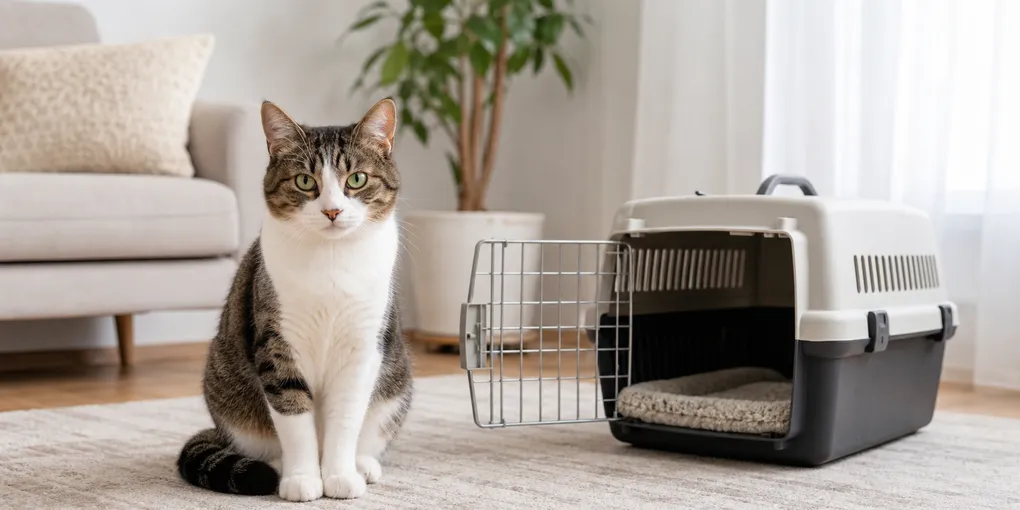
Keep a well-ventilated carrier accessible, with familiar bedding if the cat uses it calmly. For a sick cat, avoid covering ventilation openings, spraying calming fragrance into the carrier, or placing the carrier in direct sun. Call the clinic while preparing transport and follow its instructions. If your veterinarian has supplied an inhaler chamber or rescue plan, use only the exact medicine and instructions prescribed for that individual cat.
Do not give leftover steroids, cough suppressants, antibiotics, essential oils, or a human inhaler. Asthma treatment commonly involves corticosteroids, sometimes with bronchodilators, but the correct medicine and route depend on the diagnosis and severity. A bronchodilator alone does not treat the airway inflammation that drives asthma.
Practice the carrier routine only when the cat is well. Leaving it open with familiar bedding in a quiet room can make it less surprising when transport is urgent. If the cat has a prescribed plan, keep the clinic number, after-hours location, and medication instructions together, but do not change a dose or substitute a device based on an old instruction. A calm, direct trip is safer than repeated attempts to make the carrier experience perfect.
Questions to take to the appointment
Ask what diagnosis is most likely, which alternatives still need to be ruled out, what signs change the urgency, and whether the clinic wants a resting-breathing log. If medication is prescribed, ask for a written plan covering daily treatment, missed doses, spacer or mask training, recheck timing, and the exact signs that mean emergency care.
The safest outcome is a household that notices a change early and does not improvise. A video and a calm baseline log can make the visit more efficient; open-mouth breathing or obvious distress means transport, not more home observation.
Sources
- Cornell Feline Health Center, Feline Asthma: What You Need To Know
- Cornell Feline Health Center, Dyspnea (Difficulty Breathing)
Frequently Asked Questions
- No. Hairballs, bronchitis, parasites, infection, heart disease, and other airway problems can overlap. A veterinarian must identify the cause.
- A calm resting count can be useful context for a veterinarian. Count chest rises for 30 seconds and double it, without waking or restraining the cat.
- Do not give any human medicine unless the prescribing veterinarian has provided the exact medicine, device, dose, and action plan for your cat.