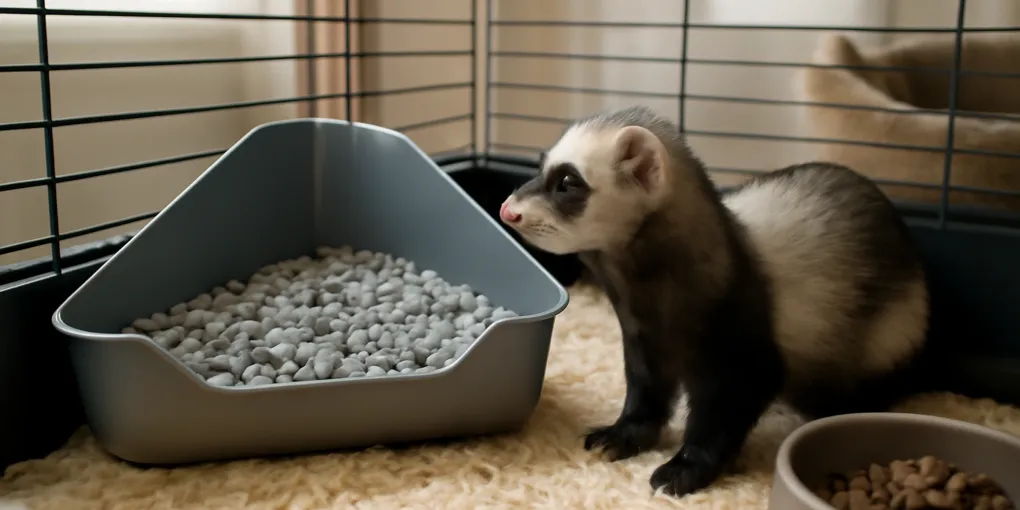
Best Ferret Litter Boxes for Corner Training: Low Entries, High Backs, and Safer Cage Fit
Buyer's GuideMarshall lock-on ferret litter pan
Best cage-corner defaultBest for: Cage corners where the pan must clip in place
$12-$25
Quick picks
| Product | Key Specs |
|---|---|
| See price on Amazon |
|
| See price on Amazon |
|
| See price on Amazon |
|
Product availability, certifications, and retailer details can change; check the current Amazon page before buying.
Medical Disclaimer
A ferret that strains, cries, drips urine, has bloody urine, stops eating, becomes weak, or suddenly misses the box needs veterinary care. This guide covers litter-box gear and cleaning habits, not urinary disease diagnosis.
Quick picks
Ferrets do not use a litter box like a tidy house cat. They wake up, back into a corner, and often go quickly. The best ferret litter box is therefore a corner target that is easy to enter, difficult to shove aside, and tall enough at the back to protect cage walls.
- Choose a lock-on corner pan for the main cage if your ferret tips loose pans.
- Choose a high-back scatterless pan for ferrets that overshoot the rear edge.
- Add a large low-entry backup pan in the room corner your ferret already chooses.
For cage layout, pair the pan with a sleeping area and food station that are clearly separate. If you also manage senior-pet mobility, our senior dog mobility plan shows the same principle: make the desired route easier than the risky one.
Ferret litter box score
| Criterion | Weight | Score | Why it matters for ferrets |
|---|---|---|---|
| Corner fit and backing room | 30% | 8.5 | Ferrets usually reverse into a corner, so cramped pans cause misses. |
| Low entry | 25% | 8.0 | A high front lip teaches small, young, or stiff ferrets to go beside the pan. |
| Attachment and stability | 20% | 8.3 | A pan that slides becomes a toy, not a bathroom. |
| Cleaning speed | 15% | 8.0 | Odor control depends on daily removal, not perfume. |
| Material transparency | 10% | 7.8 | Smooth plastic and simple shapes make cracks, odor, and residue easier to spot. |
| Composite | 8.2/10 | A good pan removes friction from a habit ferrets already have. |
Product notes
Marshall lock-on ferret litter pan
A lock-on pan is the safest first purchase for many cages because the clip reduces tipping and dragging. Size still matters. A pan that fits the cage corner but not the ferret’s full body will produce misses along the front edge.
Best fit: young or adult ferrets in wire cages where a loose pan gets moved.
Search Amazon for Marshall lock-on ferret litter pan
Ware scatterless lock-n-litter pan
High-back pans help when the problem is urine over the rear edge rather than refusal to use the pan. Check the front lip before buying. A steep step-in can be a problem for older ferrets or kits that are still learning.
Best fit: cage corners with wall splatter or bedding pushed against the bathroom corner.
Search Amazon for Ware scatterless lock-n-litter ferret pan
Large low-entry small-animal litter pan
During playtime, the best box is often the one placed in the corner the ferret already picked. A larger low-entry pan is easier to hit during high-speed play breaks and can be washed separately from the cage pan.
Best fit: supervised rooms, playpens, and temporary travel setups.
Search Amazon for large low-entry ferret litter pan
What to avoid
Avoid covered cat boxes in small rooms because trapped odor and poor visibility make cleaning harder. Avoid dusty clay and heavily scented litter. The Merck Veterinary Manual ferret overview notes that ferrets are active carnivores with species-specific husbandry needs; bathroom gear should be chosen for ferret behavior, not copied from cats. The RSPCA ferret environment guidance also emphasizes space, sleeping areas, and enrichment, which means the toilet corner should not crowd the rest of the cage.
Setup protocol
- Put the first pan in the corner your ferret already uses.
- Add a thin layer of paper pellet litter; do not bury the pan like a cat box.
- Move a small amount of soiled paper into the new pan for scent cueing.
- Keep bedding, hammocks, and food bowls out of the bathroom corner.
- During room time, block unsafe corners and place backup pans in the two most-used corners.
- Reward calm entry with a treat, then let the ferret leave. Do not trap the ferret in the box.
Cleaning cadence
Scoop obvious waste daily. Wash the pan before odor builds into the plastic. If misses suddenly increase after a period of good habits, check whether the pan moved, the litter changed, the front lip is too high, or another ferret is guarding the cage corner.
Ferret litter box FAQ
Should a ferret litter box fill the whole cage corner?
It should be large enough for the ferret to step in, turn slightly, and back up without hanging over the front. Bigger is better until it starts stealing too much sleeping or feeding space.
Is a triangle pan always better than a rectangle pan?
No. Triangle pans fit cage corners, but a rectangular low-entry pan can work better in a playroom if your ferret uses a wall corner with more floor space.
Why does my ferret poop next to the box?
Common reasons are a high front lip, a pan that slides, a pan that is too small, dirty litter, or placement in the wrong corner. Sudden changes can also be medical, so monitor urine and appetite.
Sizing details owners usually miss
A ferret litter pan has to fit the animal before it fits the cage. Measure from the chest to the base of the tail while the ferret is standing, then choose a pan that lets most of that body length sit inside the rim. If only the front paws fit, the ferret can be technically “in” the box while the waste lands outside. This is common with small triangle pans sold for starter cages.
The front lip is the second measurement. Kits can hop over higher lips, but a sleepy ferret heading to the bathroom after a nap will choose the easiest path. Older ferrets, ferrets recovering from illness, and ferrets with hind-end weakness need a lower entry than a young adult. If the box is otherwise good but the entry is too high, use it as a room backup rather than the main cage box.
Litter choice changes box success
Paper pellets are the default because they control moisture without the dust and clumping behavior that make many cat litters a poor fit. Use enough litter to cover the floor of the pan, not a deep digging layer. A deep layer encourages some ferrets to snorkel, kick, or sleep in the pan.
Do not judge the box only by odor on day one. A pan that is too small may smell fine but still create corner misses. A scented litter may smell pleasant to humans while making the bathroom corner less appealing to the ferret. If you change litter, change only one variable at a time so you can tell whether the pan, placement, or substrate caused the regression.
Cage layout examples
In a single-level cage, put the litter pan in the back corner, bedding in the opposite corner, and food away from both. In a multi-level cage, place a pan on the level where the ferret sleeps and another on the level used for food or play. Do not expect a half-awake ferret to climb down a ramp to find the only box.
For playpens, watch the first ten minutes. Many ferrets use the bathroom shortly after waking and again after bursts of play. If your ferret repeatedly backs into the same room corner, put the backup pan there and reward use. If the pan is in the corner you prefer but the ferret chooses a different one, move the pan before the habit gets stronger.
Troubleshooting misses
The pan is clean but still ignored
Try moving it to the chosen corner, lowering the entry, or using a larger rectangle pan. A clean pan in the wrong corner is still the wrong pan.
The ferret digs all the litter out
Reduce litter depth and add a separate supervised dig box or tunnel. Bathroom litter should not be the main digging enrichment.
One ferret blocks another
Multi-ferret homes need more than one bathroom option. A guarded corner pan can make the lower-ranking ferret choose bedding or the floor.
The ferret sleeps in the litter box
Check whether the cage has enough dark, clean sleeping spaces. If the pan is the only enclosed-feeling corner, the layout is asking the bathroom to do two jobs.
Final buying test
Before checkout, imagine cleaning the pan at 7 a.m. with a ferret trying to climb your sleeve. The winning pan can be unclipped, dumped, scrubbed, dried, and replaced without disassembling the cage. It has no tight molded corners that hold sludge and no decorative hood that hides waste until odor is already high.
Also check the return window. Some ferrets need a larger pan after one week of real use. If the box is clean but misses collect along the front, size up quickly rather than teaching a bad corner habit.
If the first pan fails, do not buy three identical replacements. Change one factor at a time: larger floor, lower lip, firmer attachment, or a better corner match. That makes the next adjustment measurable.
Frequently Asked Questions
- Most ferrets prefer a corner-style pan with a low front and enough rear height to catch urine when they back into the corner.
- Avoid dusty or clumping litters unless your veterinarian specifically approves them. Paper pellets are the safer default for most ferret homes.
- Use at least one box in the cage and add extra boxes in favorite room corners during supervised play.