Aquarium Air Pump Backup Protocol for Power Outages
ProtocolQuick picks
USB Rechargeable Aquarium Air Pump
★ Top pick Best reusable outage backup- Reusable battery
- Easy monthly testing
- Good for planned storms
- Must be kept charged
- Runtime varies by setting
D-Cell Battery Aquarium Air Pump
Best shelf-stable backup- Works without charging
- Cheap spare option
- Simple controls
- Needs fresh batteries
- Often louder
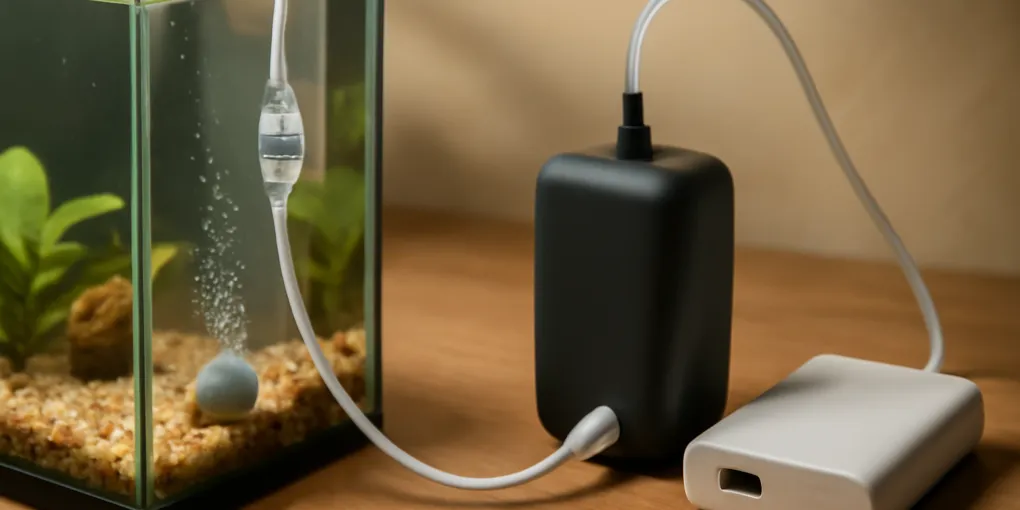
A battery air pump is one of the cheapest pieces of aquarium emergency gear, but it only helps if it is already assembled, tested, and matched to the tank. During a power outage, fish need oxygen exchange at the water surface. Filters, heaters, and lights can stop at the same time, so the backup plan should focus first on keeping water moving gently and avoiding preventable equipment mistakes.
This protocol is for small freshwater aquariums, quarantine tanks, and lightly stocked community tanks. Large tanks, saltwater systems, heavily stocked tanks, and heat-sensitive species need a broader power plan.
Quick picks: the outage kit
Keep these items in one labeled bag or bin near the aquarium:
- Battery or USB rechargeable air pump sized for the tank. Search Amazon for rechargeable aquarium air pump.
- D-cell emergency air pump if you want a shelf-stable spare that does not depend on charging. Search Amazon for a D-cell aquarium air pump.
- Air stone or small sponge filter already attached to tubing.
- Check valve installed in the correct direction.
- Fresh batteries or charged power bank, depending on pump type.
- Towel and tape for routing tubing without pulling the air stone out of place.
If you already run a sponge filter, a backup pump can keep that sponge moving during an outage. If your tank uses a hang-on-back filter, a separate air stone is the simpler emergency option. For new-fish holding tanks, pair this plan with the separate aquarium quarantine tank setup protocol.
Why aeration matters first
Fish use oxygen dissolved in the water. Surface agitation is the fastest owner-controlled way to support oxygen exchange when the main filter stops. A weak airstone near the surface is usually more useful during the first hour than a decorative bubbler buried under gravel, because the goal is surface movement rather than display bubbles. Warm water holds less oxygen than cool water, and oxygen demand rises in crowded tanks, medicated tanks, and tanks with heavy organic waste.
RSPCA fish-care guidance emphasizes stable water quality and suitable aquatic environments (RSPCA fish environment advice). During an outage, you cannot maintain normal filtration, but you can reduce oxygen risk by moving surface water, skipping feeding, and keeping the backup airline short enough that a small battery pump can still push air.
Choose the pump type
USB rechargeable pump
A USB rechargeable pump is the easiest option to test monthly. Charge it, plug in tubing, and confirm that the air stone bubbles. Some models run continuously; others pulse to extend runtime. Choose this style if you track storm alerts or already keep a charged power bank.
The weak point is owner behavior. A rechargeable pump that lives in a drawer with a dead battery is not a backup. Put a calendar reminder on the same day you test smoke alarms or change filter media.
D-cell battery pump
A D-cell pump is the better shelf-stable option for owners who do not want another rechargeable device. Store fresh batteries next to the pump, not inside it, to reduce corrosion risk. Test the pump briefly, then remove the batteries again.
These pumps can be louder and less refined, but they are excellent as a second backup. If you keep multiple tanks, one rechargeable unit plus one D-cell spare is often more resilient than one expensive pump.
Setup protocol before an outage
- Cut airline tubing long enough to place the pump above the tank rim or safely on a dry surface.
- Install a check valve with the arrow pointing toward the tank.
- Attach the air stone and place it near the surface or midwater, not buried under decor.
- Run the pump for five minutes and confirm visible bubbling.
- Label the pump with the tank size it is assigned to.
- Store the pump, tubing, air stone, and batteries together.
Do not wait until the lights are out to learn which way the check valve points. Blow gently through the tubing during setup if you need to confirm direction.
What to do when power fails
Turn on the backup air pump and stop feeding. Fish can usually handle a short fast better than the waste created by food in a stalled tank. Keep the lid closed to reduce heat loss in cool weather, but make sure tubing is not pinched.
If the outage lasts more than a few hours, watch fish behavior. Gasping at the surface, clustering near the air stone, or sudden lethargy are warning signs. Avoid large, cold, unconditioned water changes unless you know exactly what parameter you are correcting.
For very warm rooms, extra surface agitation becomes more important because warm water carries less oxygen. For cold rooms, temperature may become the bigger problem. The air pump is one part of the plan, not the whole plan.
Product notes
USB rechargeable aquarium air pump is the best primary choice for most small tanks because it can be tested and reused without buying batteries. Pick a model with simple controls and enough runtime for the longest outage you reasonably expect.
D-cell battery aquarium air pump is the best backup to the backup. It is inexpensive, easy to understand, and does not depend on remembering to charge it. Buy fresh batteries and write the purchase month on the package.
Air stone plus check valve kits are cheap enough to keep spares. Replace clogged air stones and stiff tubing before storm season.
Common mistakes
- Pump stored without tubing or an air stone.
- Check valve installed backward.
- Disposable batteries left inside the pump for months.
- Air stone placed so deep that a weak pump barely bubbles.
- Feeding normally during a long outage.
- Assuming aeration solves temperature or ammonia problems.
If you keep sensitive species, ask an aquatic veterinarian or experienced local aquarium shop about your specific outage risk. RSPCA fish health advice also stresses that behavior changes can be signs of poor environment or illness (RSPCA fish health advice).
FAQ
What does a backup air pump actually do during an outage?
It moves water at the surface so oxygen exchange continues when the main filter is off. That can buy time in warm or stocked tanks, but it does not replace heat, filtration, or water-quality testing during long outages.
Where should the check valve go on emergency airline tubing?
Install it in the airline with the arrow pointing toward the tank. It matters most when the pump can sit below the waterline because it helps prevent aquarium water from siphoning down the airline if the pump stops or tubing shifts.
What should I check before storm season?
Test monthly before storm season and before travel. Confirm the pump starts, bubbles reach the tank, the check valve faces the right direction, and batteries or charge level are ready.
Bottom line
For most small freshwater tanks, buy a USB rechargeable air pump as the primary backup and a D-cell pump if outages are common. Assemble the tubing and check valve now, test monthly, and stop feeding during outages until normal filtration returns.